Chinglish! Hilarious examples of signs lost in translation
With so many English-speaking tourists and businessmen now travelling to China, the Chinese are having to translate their signs to help visitors. Sometimes, though, the message gets lost, and the results can be amusing, and often utterly baffling. Now a new book has collected pictures of some of the best examples and here we present a selection.








Incredible Satilite Pictures
With their high octane colours and incredible detail they look more like canvassed art than landscapes of the earth.Captured by some of NASA's most advanced satellites hundreds of miles above the earth, these unusual and striking images show our planet like never before.
Taken between 1999 and 2006, they form part of NASA's Earth Observatory project, which gathers images showing the Earth's climatic and environmental change.
The images range across the globe from Colorado's Rocky Mountains, Lake Disappointment in the Western Australian outback to Mexico's Colima Volcano.
Known as "Earth Art," the US Space Agency will use these images to study the Earth's changing landscape and environment from rising sea levels to deforestation.

An image of Lake Carnegie in Western Australia which fills only during heavy rainfall
In October 1999, The Enhanced Thematic Mapper Plus (ETM+) instrument on NASA's Landsat satellite captured one "false-colour" image of part of the Rocky Mountain's Minturn Formation. It is called false-colour because filters are applied to the camera to highlight environmental phenomena for the benefit of the researchers.
Over time, the Ancestral Rocky Mountains has completely eroded, leaving Colorado flat. The current Rocky Mountains began to rise about 70 million years ago. Minturn Formation of central Colorado show the mountain-building process pushed areas that were once on the ocean floor high above today's sea level.
In another image, pink indicates bare ground, and green indicates vegetation. Snowy areas are light blue. Pale rivulet patterns in the south-western show where streams drain from the mountains to the adjacent lowlands.

Snow-capped ridges of the eastern Himalayas creating an irregular white-on-red patchwork between rivers and China
Another one taken in July 2000 shows California's Death Valley. At 86 metres (282 feet) below sea level, it is one of the hottest and driest places on the planet. On average, the area sees only about 5 centimetres (1.96 inches) of rain a year, and summer temperatures routinely soar above 38 degrees Celsius (100 degrees Fahrenheit).
The images allow scientists to understand how plants and animals survive on the punishing environment.
An Advanced Spaceborne Thermal Emission and Reflection Radiometer (ASTER) captures an image in June 2001 in south-western Kansas. Resembling a work of modern art, variegated green crop circles cover what was once short-grass prairie. Each of these crops was at a different point of development when the image was taken, accounting for the varying shades of green and yellow.
The most common crops in this region are corn, wheat, and sorghum. Healthy, growing crops are green, whereas corn would be growing into leafy stalks by late June. Like crops throughout large sections of the US Midwest, these are partly fed by water from the Ogallala Aquifer, a giant layer of underground water.

Surrounded by sand dunes, Lake Disappointment is an ephemeral salt lake in one of the most remote areas of Western Australia
One of the largest underground repositories in the world, the Ogallala Aquifer lies under about 450,000 sq. km of the Great Plains an area that includes parts of eight US states. The water is between 30 and 100 metres below ground, and the amount of water in the aquifer varies greatly from region to region.
Though the aquifer is a reliable source of water for irrigated cropland, NASA scientists and geologists will use these images to explore concerns that it could eventually run dry. The rivers and streams that initially fed the aquifer have long since disappeared in the geologic development of the West after the last ice age.
Like the images of Ogallala Aquifer, Lake Natron, in Africa's Great Rift Valley, practically sends a warning with its colour. This bright red lake is the worlds most caustic body of water. ASTER flying on the Terra satellite captured this image in March 2003.

The Ganges River forms an extensive delta where it empties into the Bay of Bengal
An endemic species of fish, the alkaline tilapia, lives along the edges of the hot-spring inlets, and the lake actually derives its colour from salt-loving micro-organisms that thrive in its alkaline waters.
Another image simulates natural colour, showing where the salt-loving micro-organisms have coloured the lakes salt crust red or pink. The salt crust changes over time, giving the lake a slightly different appearance each time it is photographed by astronauts or imaged by satellites.

Earth Art: A snow-capped Colima Volcano, the most active volcano in Mexico
An alluvial fan, xinjiang province, china covering an area 56.6 x 61.3 km and taken on may 2nd, 2002, this photo shows an alluvial fan that formed on the southern border of the taklimakan desert in china. an alluvial fan usually forms as water leaves a canyon, each new stream eventually closing up due to sediment - the result being a triangle of active and inactive channels. the blue ones on the left are currently active.

Stunning: The images are part of NASA's Earth Observatory project , which show climatic and environmental changes
hurricane isabel, 2003 this terrifying photo of hurricane isabel was taken on the international space station in 2003 and illustrates the immense size of the hurricane's eye. this particular hurricane was the deadliest of 2003 and winds reached 165 mph at its peak.

greenland's eastern coast, august 21st, 2003 the fractal coastline of greenland and its numerous fjords as seen from space. little spots of white in the water seem to be ice originating from the deeper fjords that reach all the way to the icecap covering most of the island

A total solar eclipse from space, 1999 the shadow of the moon covers part of earth on august 11th, 1999 in this photo taken from mir space station. this shadow raced across earth at 2000 km/h, all areas under the centre of it plunged into darkness during a total solar eclipse. this was apparently one the final photos taken from mir.

Egmont national park, new zealand mt. egmont volcano last erupted in 1755 and is now situated at the centre of egmont national park. park regulations have ensured the survival of a forest which extends at a 9.5 km radius from the summit of the volcano, the result of which can be seen from space in the form of huge dark green disc. this photo was taken during the sts-110 mission, april 2002.

mt. etna eruption, october 2001 taken from the international space station in 2001, this is a photo of a particularly violent eruption on the island of sicily which produced a cloud of ash that travelled as far as libya. on the humongous version of the photo lighter coloured smoke can be seen near the volcano - this was caused by lava igniting nearby forests.

Richat structure, mauritania the cause of the richat structure in the sahara desert of mauritania has been debated for many years. at first it was thought to be a meteor impact crater due to its circularity but this has since been disproven due to the lack of shock-altered rock in its vicinity. this massive (30 mile diameter) oddity is now believed to have been a rock dome sculpted over time by erosion. this incredible image was taken by the advanced spaceborne thermal emission and reflection radiometer (aster) on october 7th, 2000.

Retreating glaciers in the bhutan-himalaya a beautiful but clear sign that glaciers are slowly melting due to global warming. easily visible are the ends of most of these glacial valleys' surfaces turning to water to form lakes, a trend which has been noticed only in the last few decades.

sri lankan coast, 26th december 2004 the ocean rapidly retreats 400 metres on the south-western coast of sri lanka, just 5 minutes prior to the arrival of a devastating tsunami.

the swirling waters continue to batter the coast just moments after the main wall of water has hit.

Could we be hastening the demise of the universe just by looking at it?
The curiosity of quantum scientists could accidentally trigger the end of the world, it is claimed.Astronomers may have hastened the demise of the universe - just by looking at it, according to a new theory.
Two U.S. scientists have come to the startling conclusion that the mere act of observing the cosmos too closely might bring it to an end.
By daring to measure dark energy, the mysterious force that is driving galaxies apart, astronomers may have begun the countdown to Armageddon.
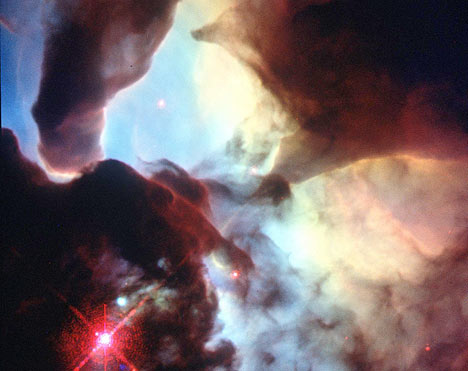
The Lagoon Nebula is just one of the many matters in the universe studied by astronomers
It relates to a strange property of quantum systems which govern the fate of subatomic particles and possibly the whole universe.
Quantum systems can shift their energy state at random, as occurs when a radioactive atom decays.
Generally the probability of an energy shift occurring increases as time passes. But if a system lasts long enough without one, a point is reached where the chances of it happening plummet dramatically.
Some scientists think the universe is overdue for a quantum energy shift that would cause everything to cease to exist. A shift is not thought to be likely though, because the universe has lasted for such a long time and is still here.
But U.S. physicist Professor Lawrence Krauss, from Case Western Reserve University in Cleveland, Ohio, and colleague James Dent, from Vanderbilt University, Nashville, fear that in the last 10 years astronomers may inadvertently have nudged the cosmos into a more dangerous state.
The reason has to do with the odd way quantum states are affected by observation. In the famous Schrodinger's cat thought experiment, a cat in a box whose fate is decided by subatomic particles is both alive and dead until someone lifts the lid and observes it.
Only then is the cat discovered to be either "alive" or "dead".
According to a law known as the "quantum Zeno effect", whenever we observe or measure something at the quantum level we set its decay clock back to zero.
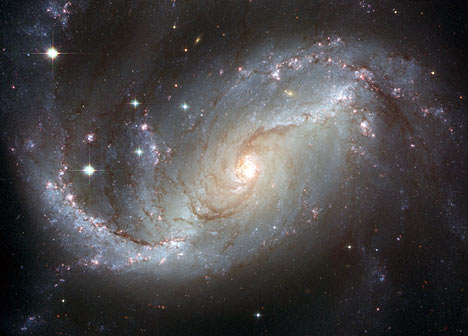
If looks could kill: Gazing at galaxies in the universe could be speeding up its decline
The physicists calculated that observing the effects of dark energy may have reset the universe's decay clock.
In 1998, astronomers measured light from exploding stars to provide the first observed evidence of dark energy, a force which is still not understood but thought to emerge from the vacuum of space.
As a result, say Dr Krauss and Mr Dent, the chances of a random energy shift destroying the universe may now be higher than it was before.
"Incredible as it seems, our detection of the dark energy may have reduced the life expectancy of the universe," Dr Krauss told New Scientist magazine.
"In short, we may have snatched away the possibility of long-term survival for our universe and made it more likely that it will decay."
Other experts are sceptical. Dr Max Tegmark, from the Massachusetts Institute of Technology in the US, points out that the quantum Zeno effect does not require humans to make observations of light.
Galaxies had "observed" dark energy long before humans evolved by being affected by it and encoding information about it, he said.
"When we humans in turn observe the light from these galaxies, it changes nothing except our own knowledge," Dr Tegmark added.
The patter of tiny paws... meet the tiger cub whose species depends on his survival
He may be small but this little big cat has some huge hopes resting on him.Conservationists believe the tiny South China Tiger cub could help to save his species from extinction.
He was born on Friday to a pair of zoo tigers from China which had been sent to Laohu Valley Reserve in South Africa to breed.
Cathay and her mate Tiger Woods – named after the US golfer – are being taught how to survive in the wild at the reserve.
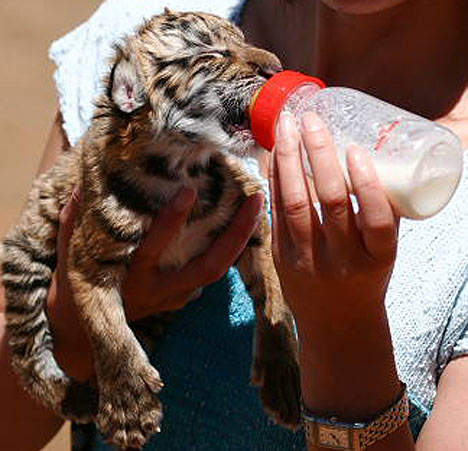
Tiger Woods Jnr enjoys a drink of milk at the reserve
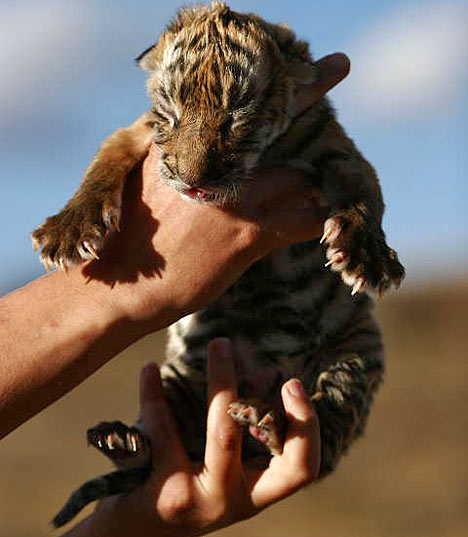
It's hoped that Tiger Woods Jnr could help to save his species from extinction.
The eventual aim is to return their offspring, like junior here, to China, where the animals will live in the wild.
Fewer than 90 South China Tigers remain in China – 60 of them in zoos – after decades of hunting and the destruction of their habitat.

Smile for the camera: Tiger Woods Jnr with his handler Li Quan
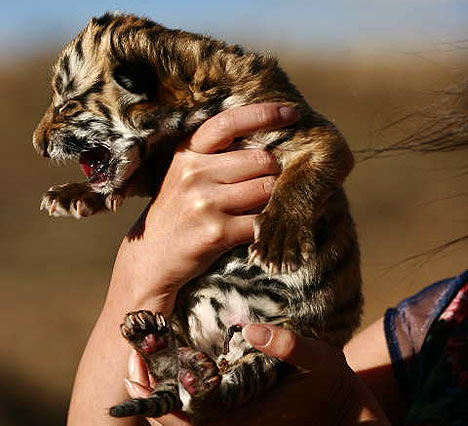
The newborn cub shows its claws
Although Cathay displayed motherly instincts by cleaning her cub, project staff removed him because they feared he might die in the unseasonally cold weather.
Eventually he will be returned to her but for now he can enjoy a bottle feed – blissfully unaware of the responsibility resting on him.

Less than 90 South China Tigers remain in China
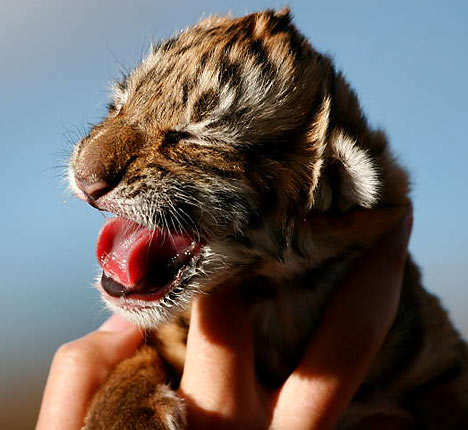
The new arrival gives a tired little yawn - clearly exhausted by all the attention he's received
The faces spotted in the strangest of places
Seeing an image of a face in a leaf is an example of pareidolia, "a psychological phenomenon involving a vague and random stimulus (often an image or sound) being perceived as significant. Common examples include images of animals or faces in clouds, the man in the moon, and hidden messages on records played in reverse."
Death of a Leaf
To the casual observer they are simply a collection of buildings, gadgets and everyday items.
But look more closely and you will see that hidden within each one there is an intriguing image of a face.
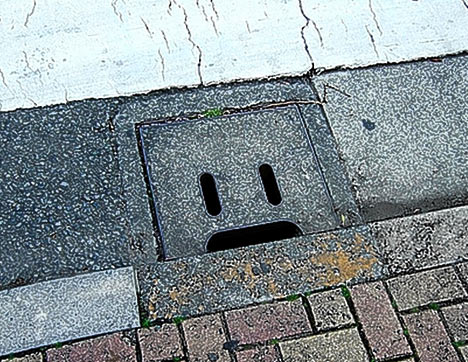
Crazy paving: You'll be laughing like a drain
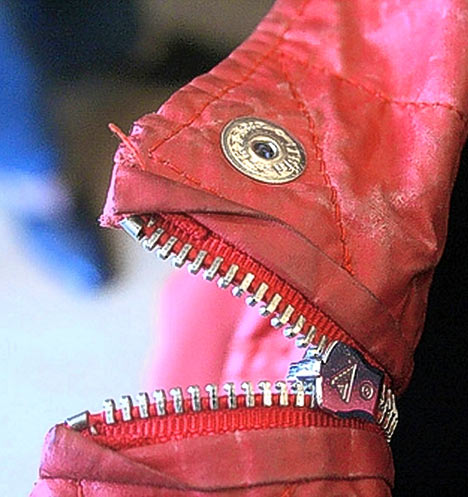
The Codfather: Just pull yourself together

Help: It's Alvin sawdust

Brassed off: Enter at your peril
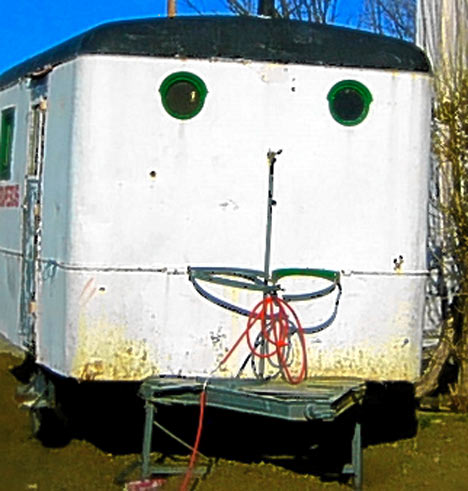
Vantastic: Just rolling along
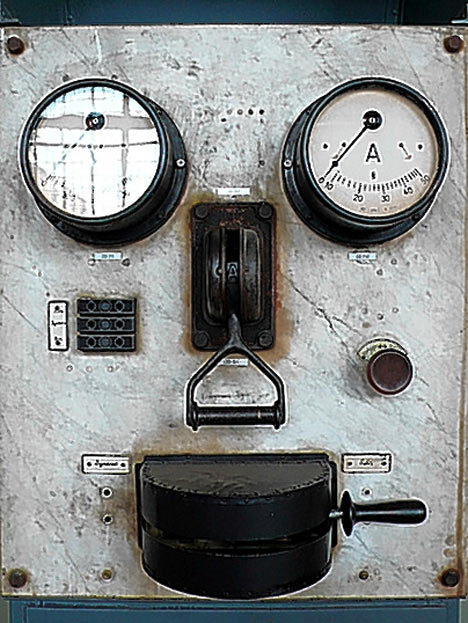
How to put a smile on your dial

Riveting: A bolt from the blue
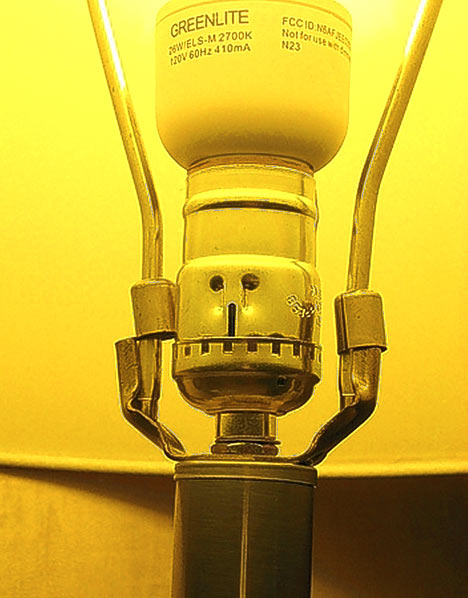
Watts up with the lady of the lamp?

In a spin: Clothes encounters of the third kind

Tintin: Looking for a new opening
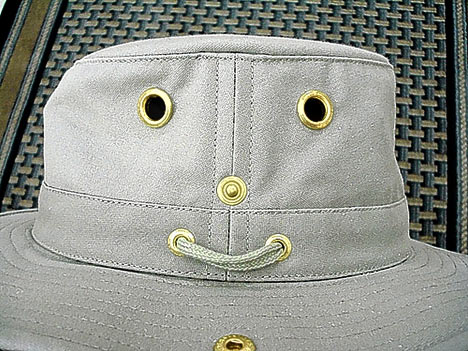
Brimming with happiness: Hats off to a day on safari
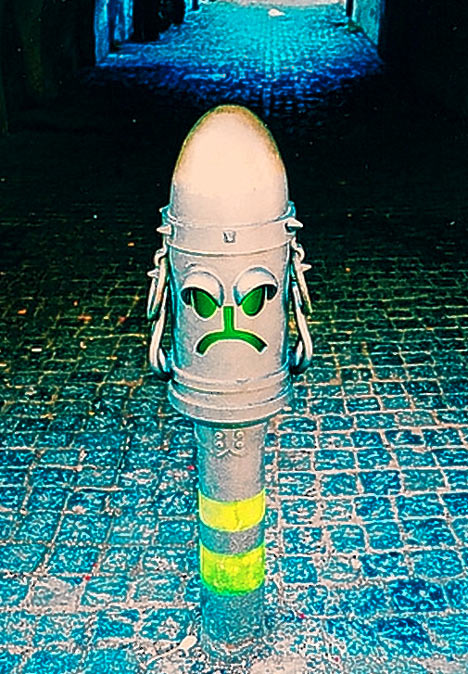
Bollards: The look that says no go
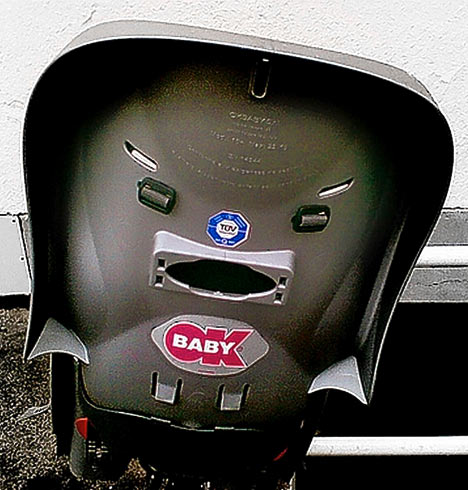
Resistance is futile: Beware of the angry buggy

Guests at the ugly plug ball

Grate pretender: Say cheese

Bathtime: But have you ever had that sinking feeling?
Is it a bird? Is it a plane? No, it's a flying mobula ray soaring high off the Mexican shore
Lurking off Mexico's eastern shore in the Sea of Cortez, these flap-jack-like creatures burst out of the water with graceful precision.Soaring as high as two metres above the plankton-rich green water, mobula rays are a sight to behold.
Here in the Sea of Cortez four species of mobulas (tarapacana, thurstoni, munkiana, and japanica) occupy the waters along with the giant manta ray.
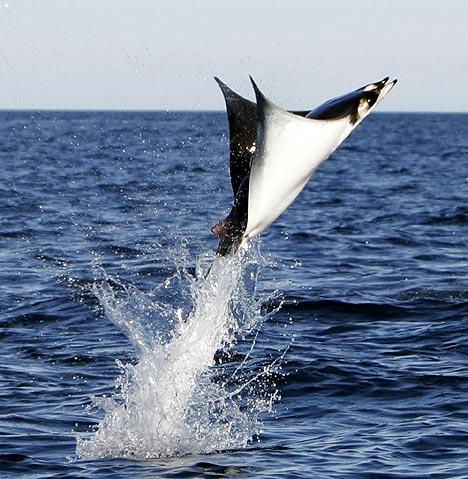
The mobula ray bursts through the water
Both mantas and mobulas are members of the Family Mobulidae, a group about which, very little is known.
Mobulas can grow up to ten feet though they are considerably smaller than their Manta Ray cousin.
Mantas, the most well known of, which is the Pacific Manta Ray, can exceed disc-like shapes of up to twenty-three feet.
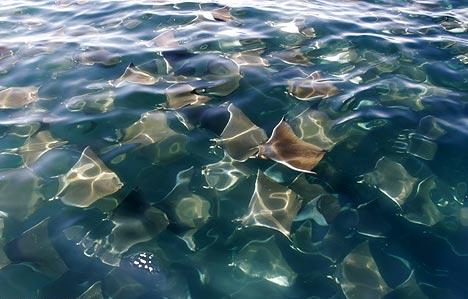
The rays flocks beneath the ocean's surface
For some time now, the comings and goings of the mobula have remained something of a mystery.
Scientists do not know why large schools spend a few days in one area, or why the disc like creatures breach the water in spectacular fashion.
Is it to dislodge the parasite-cleaning remoras that attach to their backside? Is it some way of keeping fit, of practising the underwater gathering of food? Could it be a form of play?
What if jumping was a form of co-operative hunting, a way of tricking vibration-wary mysids into migrating downwards and into the open mouths of other mobulas below?
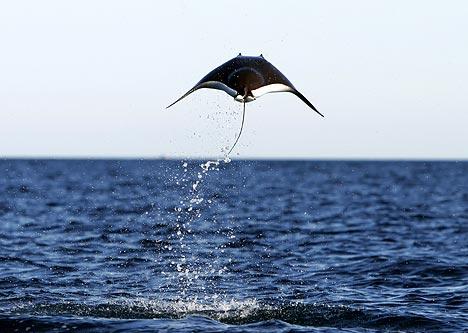
Airborne ... a mobula ray soars above the water
Keller Laros, a dive master based out of Hawaii has logged long hours underwater observing Pacific Manta Rays, the largest of munkiana's mobulid cousins.
The smaller manta ray's out-of-water acrobatics is not unlike its feeding behaviour below the surface.
Underwater, mantas have been observed doing loop after loop in the same place, concentrating their prey into a tight area.
As they circle, they direct the green soup into their mouths with the cephalic lobes found on each side of their head.
Karey Kumli, research associate at the Pacific Manta Research Group located at Santa Rosa Junior College, thinks the breaching behaviour isn't done deliberately.
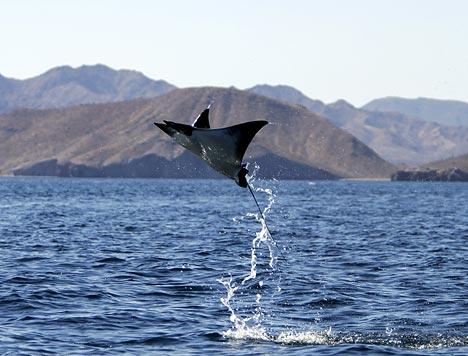
Mobula rays can grow up to 10 feet long
She said: "We wonder why they go through that plane between water and air, and I ask why would they avoid it. They'd have to be pretty careful to avoid being airborne.
"Remember, when they are in the air, there's so little resistance compared to that offered by water that a slight bend of a fin would send them tumbling."
In short, mobulas spin out in the absence of the resistance provided by water.
However, like most beautiful species of the sea they face the many dangers posed by man.
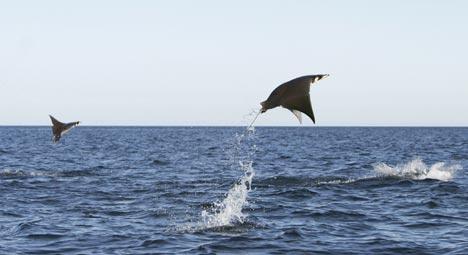
The rays can reach heights of up to two metres
SeaWatch, an environmental advocacy organisation, focus their efforts on the Sea of Cortez.
According to SeaWatch, sports fishermen in Parque Nacional Bahia de Loreto, say that their business is off 40 per cent to 50 per cent from last year, and the consensus among commercial fisherman is that there are no fish left to catch.
Longlines, trawls, spear-guns, nylon nets, and large-scale commercial operations have replaced the individual fishermen using a hand line. And it is by no means unique to the Sea of Cortez.
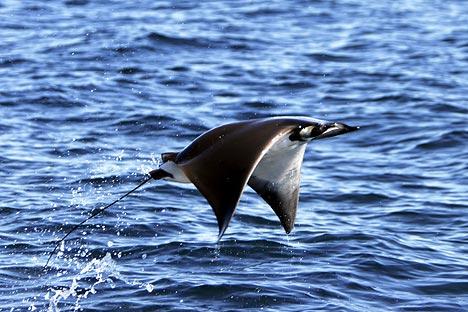
Are they playing? Or practising gathering food?
Worldwide, by-catch accounts for 20 million tons a year of unwanted fish. About one-fourth of the world's catch is thrown back.
The ratio is even higher among the take from shrimp trawlers.
Today, due in part to the work of Sea Watch, the Mexican government now imposes a $10,000 fine for those convicted of intentionally killing a Pacific Manta Ray.

The mobula ray leaps out of the water
Subscribe to:
Posts
(
Atom
)


No comments :
Post a Comment