Why Students Fail In Examz
It's not the fault of the student if he/she fails b/c the year has anonly 365 days.
Typical academic year for a student.
52 Sundays in a year which are rest days.
Balance 313 days.
Summer holidays 50 where weather is too hot & difficult to study
Balance 263 days
8hrs daily sleep means 122 days.
Balance 141 days
1 hr for daily playing (good for health) means15 days.
Balance 126 days.
2hrs daily 1 for food & other delicacies (chew properly & eat) means
30 days.
Balance 96 days.
1hr for talking (human is a social animal) means
15 days.
Balance 81 days.
Exam days per year at least 35 days.
Balance46 days
Quarterly, half yearly & festival holidays means 40 days.
Balance 6 days.
For sickness at least 3 days.
Balance 3 days.
Movies & functions at least 2 days.
Balance 1 day.
That 1 day is your birthday.
How can a student pass??


Lemon Battery
Creating a battery from a lemon is a common project in many science text books. Successfully creating one of these devices is not easy.Batteries consist of two different metals suspended in an acidic solution. Copper and Zinc work well as the metals and the citric acid content of a lemon will provide the acidic solution.
Batteries like this will not be able to run a motor or energize most light bulbs. It is possible to produce a dim glow from an LED.
The picture at the top of this page shows a basic lemon battery, a lemon, copper penny and zinc coated nail.
The lemon : A large, fresh, "juicy" lemon works best.
The nail : Galvanized nails are coated in zinc. I used a 2" galvanized common nail.
The penny : Any copper coin will work. (Canadian pennies from 1960 - 2001 all worked)
 Creating the battery : Insert a penny into a cut on one side of the lemon.
Push a galvanized nail into the other side of the lemon.
The nail and penny must not touch.

This is a single cell of a battery. The zinc nail and the copper penny are called electrodes.
The lemon juice is called electrolyte. All batteries have a " +" and "-" terminal. Electric current is a flow of atomic particles called electrons. Certain materials , called conductors, allow electrons to flow through them. Most metals (copper, iron) are good conductors of electricity. Electrons will flow from the "-" electrode of a battery, through a conductor, towards the "+" electrode of a battery. Volts (voltage) is a measure of the force moving the electrons. (High voltage is dangerous!)
 I have connected a volt meter to our single cell lemon battery.
The meter tells us this lemon battery is creating a voltage of 0.906 volts.
Unfortunately this battery will not produce enough current (flowing electrons) to light a bulb.
 To solve this problem we can combine battery cells to create higher voltages. Building more lemon batteries and connecting them with a metal wire from "+" to "-" adds the voltage from each cell.
 The two lemon batteries above, combine to produce a voltage of 1.788 volts. This combination still does not create enough current to light a small bulb. Note the red wire connecting the batteries is joined from "+" (penny) to "-" (galvanized nail).
 Four lemon batteries create a voltage of 3.50 volts. We should be able to light up a small device like an LED (Light Emitting Diode). Note the connecting wires go from "+" to "-" on each battery.
 LED
LEDImportant information about LEDs : LEDs are designed to work at very low voltages (~ 2V) and low currents. They will be damaged if connected to batteries rated at over 2 volts. LEDs require resistors to control current when used with batteries rated at over 2 volts. Lemon batteries produce low current. It is OK to connect an LED to a lemon battery.
 In the above image, electrons flow from the "-" (nail) end of our lemon battery through the LED (making it glow) then back to the "+" (penny) end of the battery. This is an electronic circuit. The LED glows dimly with this configuration.
 Improving your battery.
The first battery was created in 1799 by Alessandro Volta . Today batteries provide the power for an amazing variety of devices, everything from flashlights to robots, computers, satellites and cars. Inventors and researchers continue to improve the battery, designing batteries that last longer and that are more friendly to our environment.
Understanding how batteries actually work requires a knowledge of chemistry. The most important factor in battery design is the electrical relationship between the two metals used in the battery. Some metals give electrons away while other metals accept extra electrons. Chemists have investigated metals and created an "electric potential" table comparing different metals.

Observing Earth : Amazing View
Palm Island, Dubai, United Arab Emirates
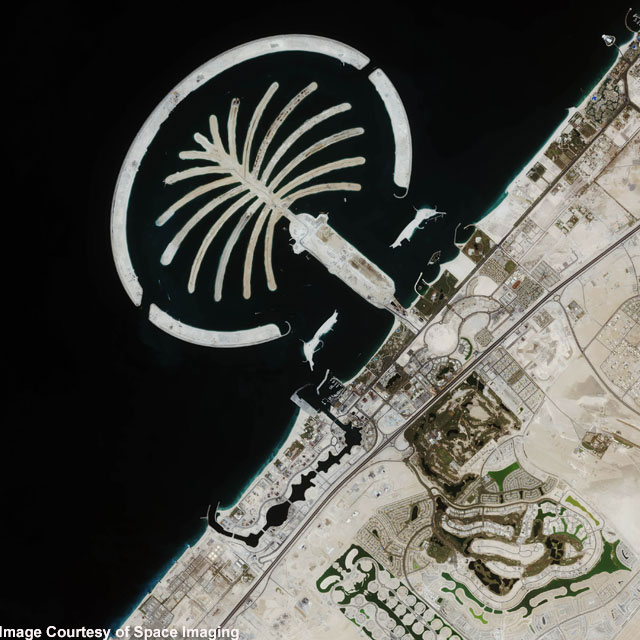 This IKONOS satellite image was collected on July 16, 2004. The image shows this man-made island that lies off the coast of Dubai in the Persian Gulf. The island is being built from 80 million cubic meters of land dredged from the approach channel to the Emirate's Jebel Ali Port. When complete, this resort will have approximately 1,200 single-family and 600 multi-family residences, an aquatic theme park, shopping centers, cinemas and more.
The Great Pyramid, Giza, Egypt
 This featured image is a 61-centimeter pan-sharpened image of the Great Pyramid in Giza, Egypt, collected by QuickBird on February 2, 2002. The Great Pyramid is estimated to have been built circa 2650 B.C., and was erected as a tomb for the Egyptian pharaoh Khufu of the Fourth Dynasty. Upon the completion of its construction, the Great Pyramid stood 145.75 meters (481 feet) high, and over the millennia has lost approximately 10 meters (30 feet) off the top. It stood as the tallest structure on Earth for more than 43 centuries.
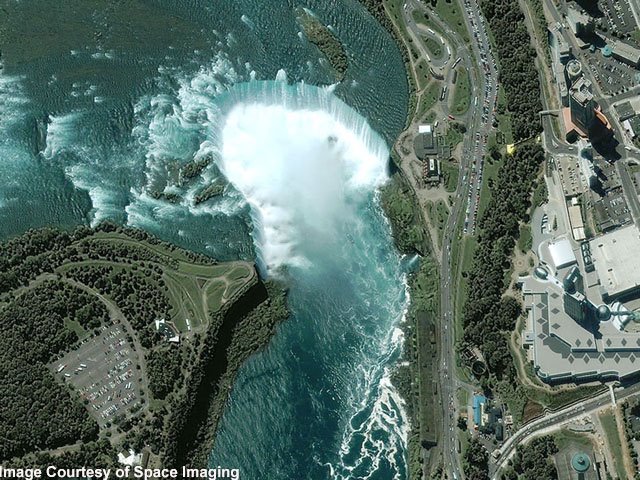 The image shows the Niagara River that connects Lake Erie to Lake Ontario, snaking around Goat Island, in the lower left of the full image. Most of the river's water plummets over the Canadian/Horseshoe Falls, but some diverted water spills over American Falls and Bridal Veil Falls downstream. Every second, more than two million liters of water plunges over the Horsehoe Falls segment of Niagara Falls creating one of the world's largest waterfalls as well as eating away as much as two meters of rock per year. The image was acquired August 2, 2004
Tsunami strikes the coast of Sri Lanka
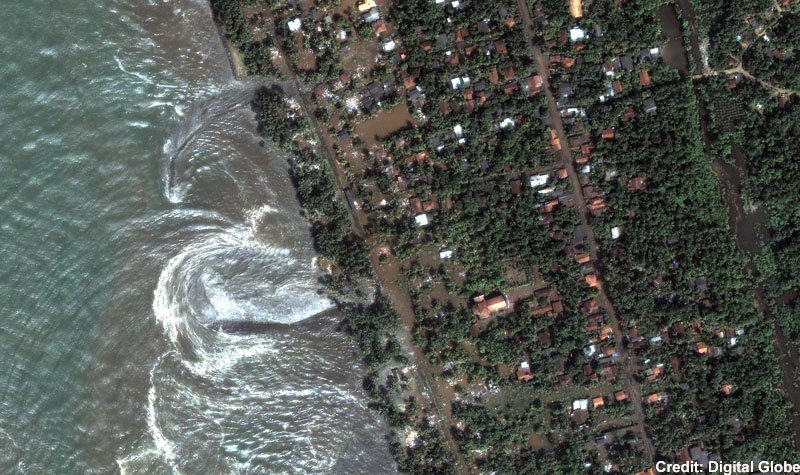 This is a natural color, 60-centimeter (2-foot) high-resolution QuickBird satellite image featuring the southwestern coast of Sri Lanka. Imagery was collected on December 26, 2004 at 10:20 a.m. Local time, slightly less than four hours after the 6:28 a.m. (local Sri Lanka time) earthquake and shortly after the moment of tsunami impact.
Ground Zero, New York City
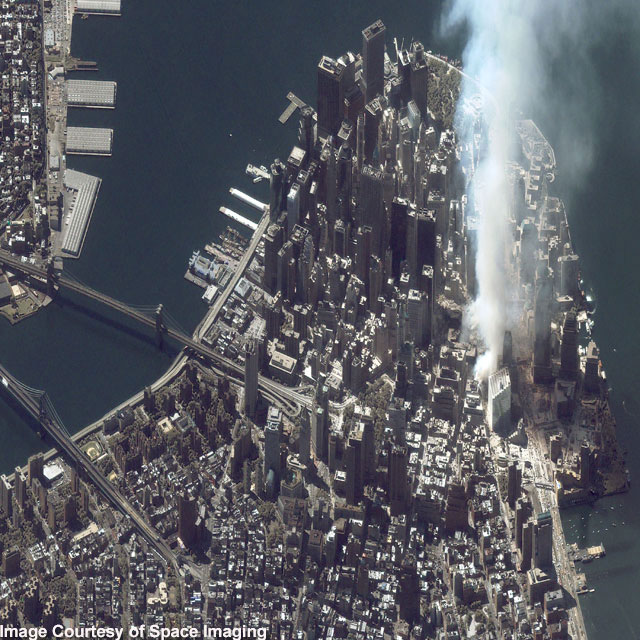 This one-meter resolution satellite image of Manhattan, New York was collected at 11:43 a.m. EDT on Sept. 12, 2001 by Space Imaging's IKONOS satellite. The image shows an area of white and gray-colored dust and smoke at the location where the 1,350-foot towers of the World Trade Center once stood. Since all airplanes were grounded over the U.S. After the attack, IKONOS was the only commercial high-resolution camera that could take an overhead image at the time.
Grand Canyon
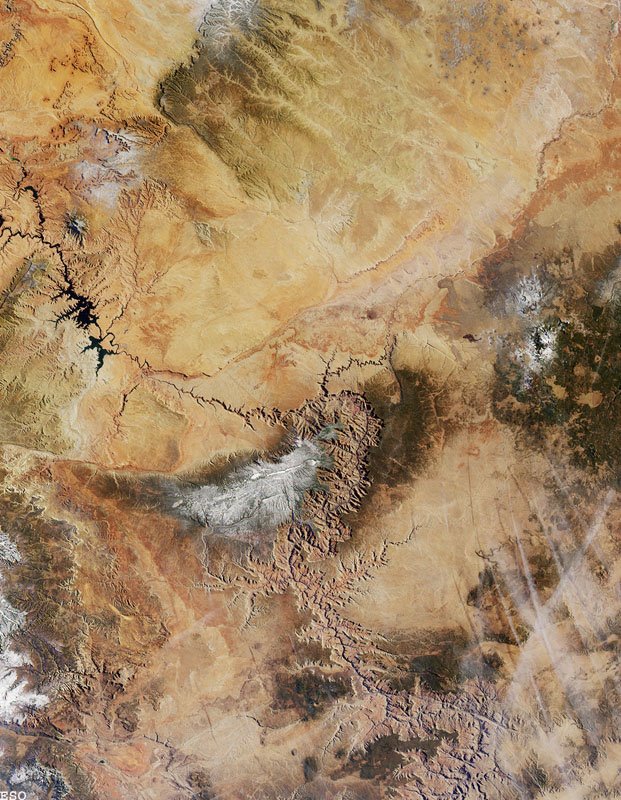 Northern Arizona and the Grand Canyon are captured in this pair of Multi-angle Imaging Spectroradiometer (MISR) images from December 31, 2000. The above image is a true color view from the nadir (vertical) camera. In addition to the Grand Canyon itself, which is visible in the western (lower) half of the images, other landmarks include Lake Powell, on the left, and Humphreys Peak and Sunset Crater National Monument on the right. Meteor Crater appears as a small dark depression with a brighter rim, and is just visible along the upper right-hand edge.
Malosmadulu Atolls, Maldives
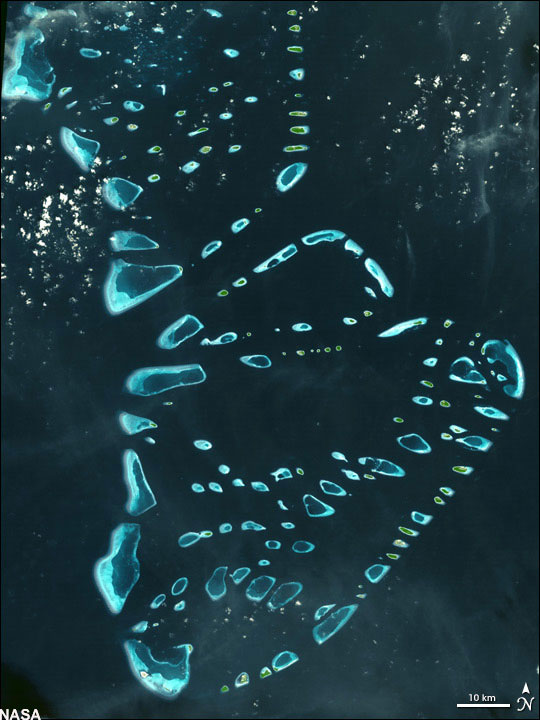 North and South Malosmadulu Atolls are in the Maldives, an island republic in the northern Indian Ocean, southwest of India. The Maldives are made up of a chain of 1,192 small coral islands, which are grouped into clusters of atolls. It has a total area of 298 square kilometers and a population of about 330,000. The capital and largest city is Male, with a population of about 80,000. Arguably the lowest-lying country in the world, the average elevation is just 1 meter above sea level. The natural-color ASTER image of the Malosmadulu Atolls was acquired on December 22, 2002, and is centered near 5.3 degrees North latitude, 73.9 degrees West longitude.
yers Rock (Uluru), Australia
 This IKONOS satellite image of Ayers Rock was collected Jan. 17, 2004. Ayers Rock is located in Kata Tjuta National Park, 280 miles (450km) southwest of Alice Springs, Australia. It is the world's largest monolith, an Aboriginal sacred site and Australia's most famous natural landmark.
Noah'S Ark Site?
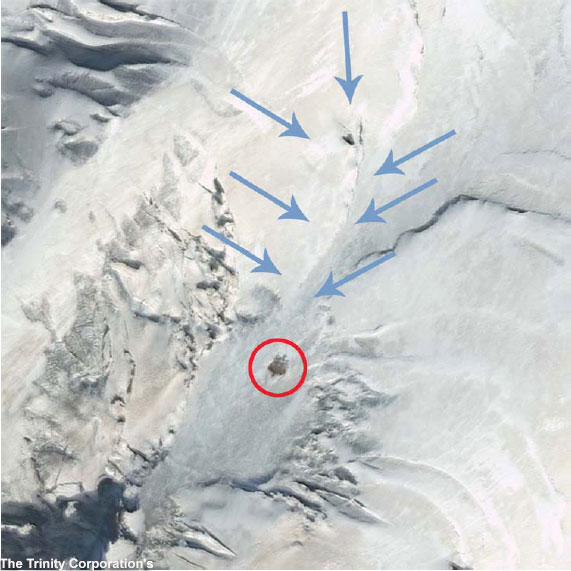 Is it or isn't it? Satellite images of Mt. Ararat, Turkey have pointed to a possible sighting of Noah's Ark. Decide for yourself! Compare this image taken by Digital Globe on September 10, 2003 with Shamrock -- The Trinity Corporation's image (enlarge). Also, note their image is flipped.
The Nile River
 This image of the northern portion of the Nile River was captured by the Multi-angle Imaging Spectroradiometer's (MISR's) nadir camera on January 30, 2001. Against the barren desert of northeastern Africa, the fertile valley of the Nile River runs northward through Egypt. The city of Cairo can be seen as a gray smudge right where the river widens into its broad fan-shaped delta. Other cities are dotted across the green landscape, giving it a speckled appearance. Where the Nile empties into the Mediterranean Sea (top) the waters are swirling with color, likely a mixture of sediment, organic matter, and possibly marine plant life. Farther west, the bright blue color of the water is likely less-organically rich sediment, perhaps sand.
Earth's City Lights
 This image of Earth's city lights, captured on October 19, 2000, was created with data from the Defense Meteorological Satellite Program (DMSP) Operational Linescan System (OLS). The brightest areas of the Earth are the most urbanized, but not necessarily the most populated. Cities tend to grow along coastlines and transportation networks. The United States interstate highway system appears as a lattice connecting the brighter dots of city centers. In Russia, the Trans-Siberian railroad is a thin line stretching from Moscow through the center of Asia to Vladivostok. The Nile River, from the Aswan Dam to the Mediterranean Sea, is another bright thread through an otherwise dark region.
Mount St. Helens, Washington
 On a Space Station expedition, astronauts observed and captured this detailed image of the volcano's summit caldera. In the center of the crater sits a lava dome that is 876 feet above the crater floor and is about 3,500 feet in diameter. The dome began to form after the May 18, 1980 eruption of Mount Saint Helens. After the eruption, there was not any dome building eruptions for more than a decade. Afternoon lighting accents the flow features in the volcanic and debris flows and the steep valleys eroded into the loosely consolidated material near the summit. This picture was taken on October 25, 2002.
RMS TITANIC - SPECIFICATIONS
- Length: 882 feet, 8 inches/268 metres
- Gross tonnage: 46,328 tons
- Net tonnage: 24,900 tons
- Total capacity: 3547 passengers and crew, fully loaded
- Decks: 9 in total (counting the orlop deck) the boat deck, A,B,C,D,E,F,G and below G boiler rooms.
- Beam: 92.5 feet/28 meters
- Height: 60.5 feet waterline to Boat Deck, 175 feet keel to top of funnels.
- Depth: 59.5 feet
- Draft: about 34 feet
- Engines: 2 reciproctating 4 cylinder, triple expansion, direct - acting, inverted engines: 30,000hp 77 rpm. 1 low pressure Parsons turbine: 16,000hp 165rpm
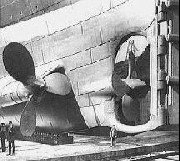
- Propellers: 3 ; Center turbine: 17 feet ; Left/Right wings: 23 feet 6 inches
- Boilers: 29 (24 double ended boilers and 5 single ended boilers)
- Furnaces: 159 providing a total heating surface of 144,142 sq. feet
- Steam pressure: 215 P.S.I.
- Watertight compartments: 16, extending up to F deck
- Lifeboat davits: 14 double acting Welin's with Murrays disengaging gear
- Lifeboats: 20 total as follows:
2 wood cutters 25'2" long by 7'2" by 3'0" deep with a capacity of 40 persons each
4 Englehardt collapsible boats 27'5" by 8'0" by 3'0" deep with a capacity of 47 persons each
- Lifeboat Total Rated Capacity: 1,178 persons
- Personal floatation devices: 3560 life jackets and 49 life buoys
- Fuel requirement: 825 tons of coal per day
- Water consumption: 14,000 gallons of fresh water per day
- Top Speed: 23 knots
 Titanic's Bow under construction
 The Third Class Dining Room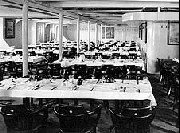
Painting of Titanic
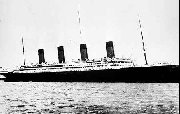
 The last photograph taken of the Titanic
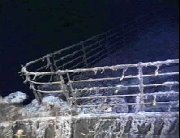
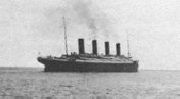 Titanic's Bow Today
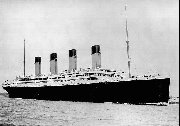
 Titanic at Sea
 The Barbershop
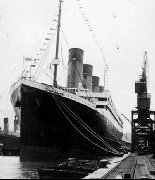
 The Titanic Docked
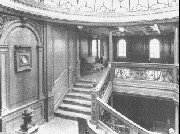
 Another view of the Grand Staircase
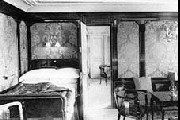
 A First Class Stateroom
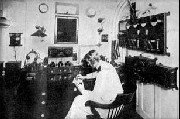
 The Marconi Radio Room
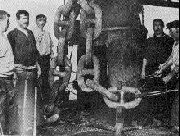
 The Anchor Chain
 Captain Smith
 Another View
 Titanic's Propeller
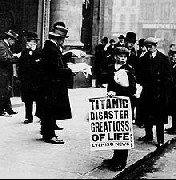
 Titanic Newspaper Headline
 The Grand Staircase
 One of the Watertight Doors
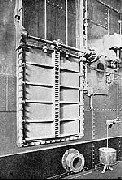 Olympic next to the Titanic being fitted
TITANIC PROVISIONS
* Fresh Meat 75,000 lbs
* Fresh Meat 75,000 lbs
* Fresh Fish 11,000 lbs
* Salt & dried fish 4,000 lbs
* Bacon and Ham 7,500 lbs
* Poultry and game 25,000 lbs
* Fresh Eggs 40,000
* Sausages 2,500 lbs
* Potatoes 40 tons
* Onions 3,500 lbs
* Tomatoes 3,500 lbs
* Fresh Asparagus 800 bundles
* Fresh Green Peas 2,500 lbs
* Lettuce 7,000 heads
* Sweetbreads 1,000
* Ice Cream 1,750 lbs
* Coffee 2,200 lbs
* Tea 800 lbs
* Rice,dried beans etc.10,000 lbs
* Sugar 10,000lbs
* Flour 250 barrels
* Cereals 10,000 lbs
* Apples 36,000
* Oranges 36,000
* Lemons 16,000
* Grapes 1,000lbs
* Grapefruit 13,000
* Jams and Marmalade 1,120 lbs
* Fresh Milk 1,500 gal
* Fresh Cream 1,200 qts
* Condensed Milk 600 gals
* Fresh Butter 6,000lbs
* Salt & dried fish 4,000 lbs
* Bacon and Ham 7,500 lbs
* Poultry and game 25,000 lbs
* Fresh Eggs 40,000
* Sausages 2,500 lbs
* Potatoes 40 tons
* Onions 3,500 lbs
* Tomatoes 3,500 lbs
* Fresh Asparagus 800 bundles
* Fresh Green Peas 2,500 lbs
* Lettuce 7,000 heads
* Sweetbreads 1,000
* Ice Cream 1,750 lbs
* Coffee 2,200 lbs
* Tea 800 lbs
* Rice,dried beans etc.10,000 lbs
* Sugar 10,000lbs
* Flour 250 barrels
* Cereals 10,000 lbs
* Apples 36,000
* Oranges 36,000
* Lemons 16,000
* Grapes 1,000lbs
* Grapefruit 13,000
* Jams and Marmalade 1,120 lbs
* Fresh Milk 1,500 gal
* Fresh Cream 1,200 qts
* Condensed Milk 600 gals
* Fresh Butter 6,000lbs
Linens
* Aprons: 4,000
* Blankets: 7,500
* Table Cloths: 6,000
* Bed Covers: 3,600
* Eiderdown Quilts: 800
* Single Sheets: 15,000
* Table Napkins: 45,000
* Bath Towels: 7,500
* Fine Towels: 25,000
* Roller Towels: 3,500
* Double Sheets: 3,000
* Pillow-slips: 15,000
* Ales and Stout 15,000 bottles
* Wines 1,000 bottles
* Spirits 850 bottles
* Minerals 1,200bottles
* Cigars 8,000
* 57,600 items of crockery
* 29,000 pieces of glassware
44,000 pieces of cutlery. Among these:
* Tea Cups: 3,000
* Dinner Plates: 12,000
* Ice Cream Plates: 5,500
* Soufflé Dishes: 1,500
* Wine Glasses: 2,000
* Salt Shakers: 2,000
* Pudding Dishes: 1,200
* Finger Bowls: 1,000
* Oyster Forks: 1,000
* Nut Crackers: 300
* Egg Spoons: 2,000
* Grape Scissors: 1,500
* Asparagus Tongs: 400
* Blankets: 7,500
* Table Cloths: 6,000
* Bed Covers: 3,600
* Eiderdown Quilts: 800
* Single Sheets: 15,000
* Table Napkins: 45,000
* Bath Towels: 7,500
* Fine Towels: 25,000
* Roller Towels: 3,500
* Double Sheets: 3,000
* Pillow-slips: 15,000
* Ales and Stout 15,000 bottles
* Wines 1,000 bottles
* Spirits 850 bottles
* Minerals 1,200bottles
* Cigars 8,000
* 57,600 items of crockery
* 29,000 pieces of glassware
44,000 pieces of cutlery. Among these:
* Tea Cups: 3,000
* Dinner Plates: 12,000
* Ice Cream Plates: 5,500
* Soufflé Dishes: 1,500
* Wine Glasses: 2,000
* Salt Shakers: 2,000
* Pudding Dishes: 1,200
* Finger Bowls: 1,000
* Oyster Forks: 1,000
* Nut Crackers: 300
* Egg Spoons: 2,000
* Grape Scissors: 1,500
* Asparagus Tongs: 400
TITANIC CARGO CLAIMED AS LOST
* 3,364 bags of mail and between 700 and 800 parcels.
* One Renault 35 hp automobile owned by passenger William Carter.
* One Marmalade Machine owned by passenger Edwina Trout.
* Oil painting by Blondel, "La Circasienne Au Bain" owned by Hokan Bjalrnstralm-Steffanson.
* Seven parcels of parchment of the Torah owned by Hersh L. Siebald.
* Three crates of ancient models for the Denver Museum.
* 50 Cases of toothpaste for Park & Tilford
* 11 bales of rubber for the National City Bank of New York
* Eight dozen tennis balls were lost which were to go to R.F. Downey & Co.
* A cask of china headed for Tiffany's.
* Five Grand Pianos.
* Thirty cases of golf clubs and tennis rackets for A.G. Spalding.
* A jewelled copy of The Ruba¡iy a¡t by Omar Khayya¡m, with illustrations by Eliku Vedder sold for AE 405 at auction in March of 1912 to an American bidder. The binding took two years to execute, and the decoration embodied no fewer than 1,500 precious stones,each separately set in gold.
* Four cases of opium
Passenger Facilities:
* Gymnasium with rowing machines, a stationary bicycle and an electric horse.
* A heated swimming pool (the first ever built into a vessel).
* Squash court on F deck.
* Turkish bath.
* 2 Barber shops with automated shampooing and drying appliances available for all classes..
* First & Second class smoking rooms (for the men).
* Reading and writing rooms (for the ladies).
* First & Second class libraries.
* 10,488 square foot First Class Dining Saloon. Seating capacity 554.
* Authentic Parisien Café with French waiters.
* A Veranda Cafe with real palm trees.
* A piano in the Third Class common room/saloon (a luxury for its day).
* Electric light and heat in every stateroom.
* 4 electric elevators complete with operators. (3 in first class, 1 in second class)
* A state of the art infirmary staffed by 2 physicians that included an operating room.
* A fully equipped darkroom for amateur photographers to try their skills.
* A 5 kilowatt Marconi wireless radio station for sending and receiving passenger's telegrams.
* A 50 phone switchboard complete with operator for intra-ship calls.
Other Facts
* In 1912, skilled shipyard workers who built Titanic earned £2 ($10) per week . Unskilled workers earned £1 or less per week. A single First Class berth would have cost these workers 4 to 8 months wages.
* Fee to send a wireless telegram: 12 shillings and sixpence/$3.12 ($36 today), for the first 10 words, and 9 pence per word thereafter.
* Passenger telegrams sent & received during the voyage: over 250.
* Cost of the Titanic (in 1912): $7,500,000
* Cost to build Titanic today: $400,000,000
Crew Salaries
* Captain E.J. Smith, Titanic: AE 105 a month
* Captain Rostron, Carpathia: AE 53 per month
* Seaman Edward Buley: AE 5 a month
* Look-out G.A. Hogg: AE 5 and 5 shillings a month
* Radio Operator Harold Bride: AE 48 per month
* Steward Sidney Daniels: AE 3 and 15 shillings a month
* Stewardess Annie Robinson: AE 3 and 10 shillings a month
(Note: The range of salaries was quite extreme in 1912. In today's money, Captain Smith earned about $72,500 per year while Stewardess Robinson earned only $2400 per year
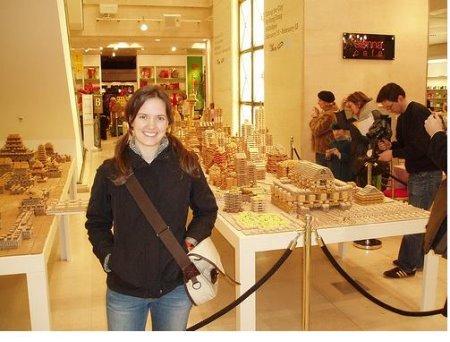
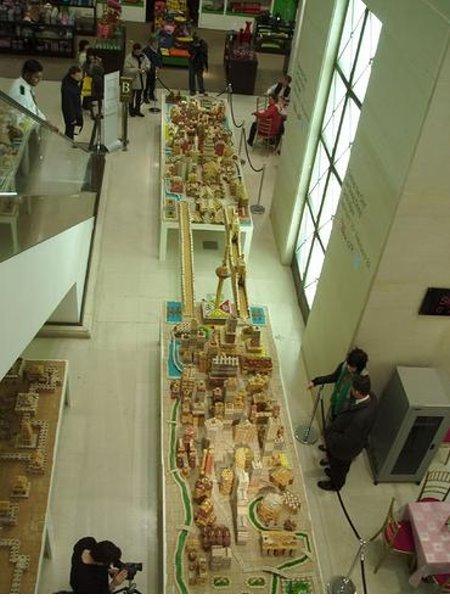
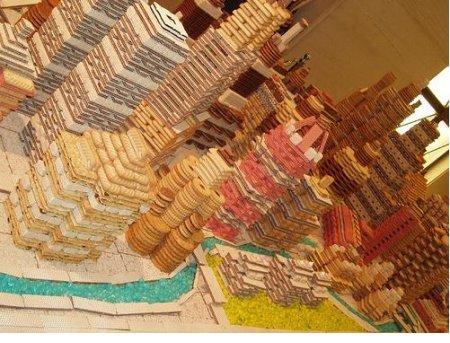
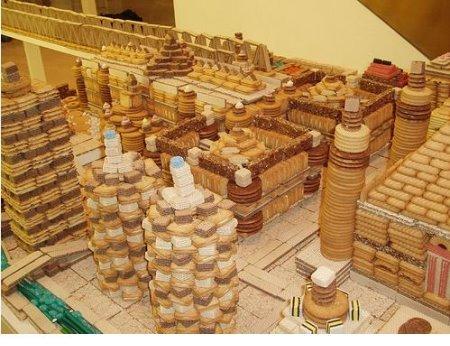
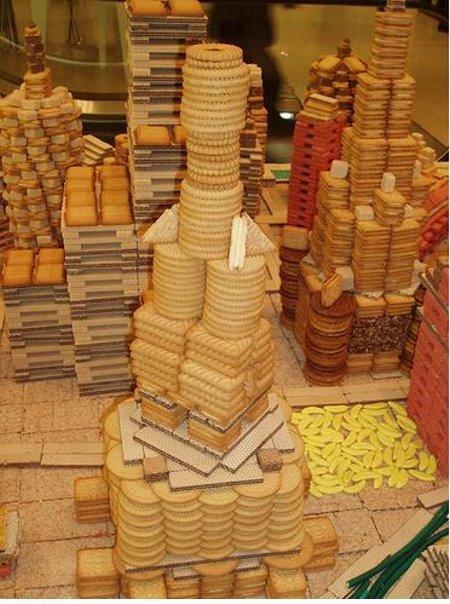
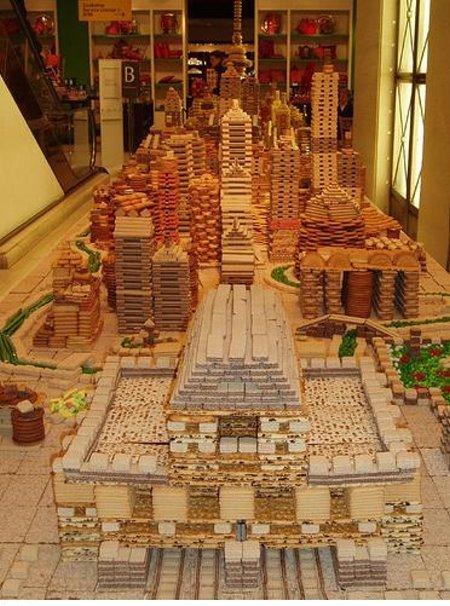
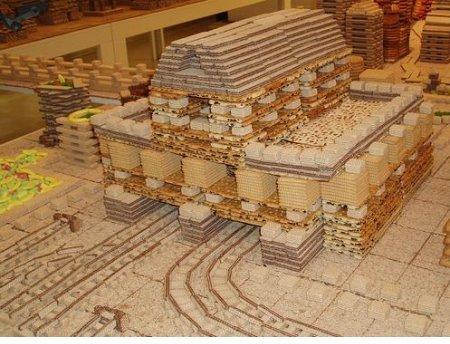
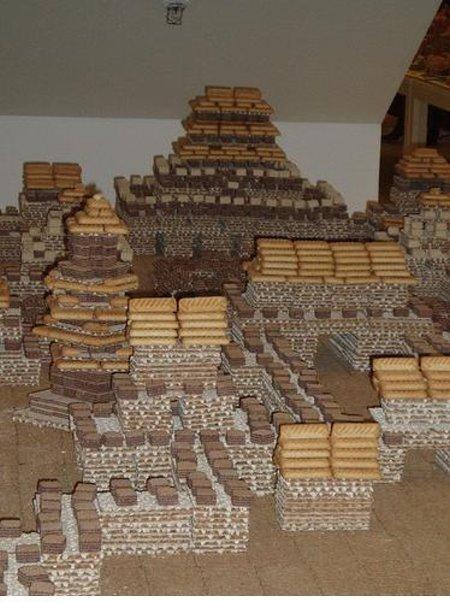
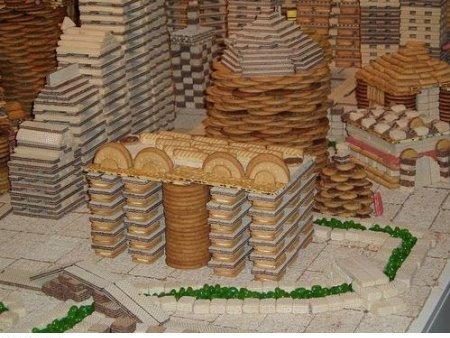
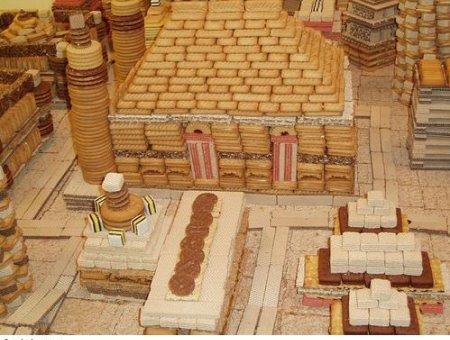
BISCUIT CITY
Created by Chinese artist Song Dong in the basement of London Selfridges.
72,000 biscuits were used in total to construct the 'Biscuit city' including Chocolate Digestives, Rich Tea, HobNobs and Fruit Shortcakes.
The 'biscuit city' is being offered to shoppers accompanied with a cup of tea for dunking!
72,000 biscuits were used in total to construct the 'Biscuit city' including Chocolate Digestives, Rich Tea, HobNobs and Fruit Shortcakes.
The 'biscuit city' is being offered to shoppers accompanied with a cup of tea for dunking!









Subscribe to:
Posts
(
Atom
)


No comments :
Post a Comment